
HeyGen, DreamFace & Veed — In-Depth Brand Evaluations
Three of the most searched AI lip sync brands, evaluated independently. Real user ratings from G2, Trustpilot, and app stores. Pricing analysis. Known issues. No sponsored placements — just honest brand assessments to help you decide.
Brand Evaluations — HeyGen, DreamFace & Veed.io
Independent assessments based on user reviews, pricing analysis, and product testing
| Feature | HeyGen — The Enterprise Standard, With a Credit System That Divides Opinion | DreamFace — The Creator Darling With a Lifetime Deal That Is Hard to Beat | Veed.io — The Editor That Does Lip Sync, Not a Lip Sync Tool That Edits |
|---|---|---|---|
| G2 Rating | 4.6 / 5 | Not listed | 4.6 / 5 |
| Trustpilot Rating | Mixed (no aggregate) | Not listed | 4.1 / 5 |
| App Store / Google Play | N/A (no mobile app) | 5.0 / 4.9 (362K reviews) | N/A (browser only) |
| Advertised Entry Price | $24/mo (Creator) | Free or $4.99/wk | Free or $9/mo (Lite) |
| Realistic Monthly Cost | $79-149/mo for regular use | $34.99 one-time (Lifetime) | $18-30/mo (Pro) |
| Hidden Cost Risk | High — credit system | Low — Lifetime option | Medium — upgrade prompts |
| Biggest User Praise | Avatar quality & languages | Speed & ease of use | Editor + subtitle combo |
| Biggest User Complaint | Credit system opacity | Cancellation difficulty | Performance & watermark confusion |
| Support Quality | Email + knowledge base | In-app + email | Email only, 24-48hr response |
| Refund Policy | Case by case | App Store / Play Store policy | No consistent policy cited |
| Company Maturity | Series C, enterprise | Profitable, bootstrapped | VC-backed, scaling |
| Update Frequency | Monthly feature releases | Frequent app updates | Quarterly feature releases |
Brand Evaluations — HeyGen, DreamFace & Veed.io
Independent assessments based on user reviews, pricing analysis, and product testing
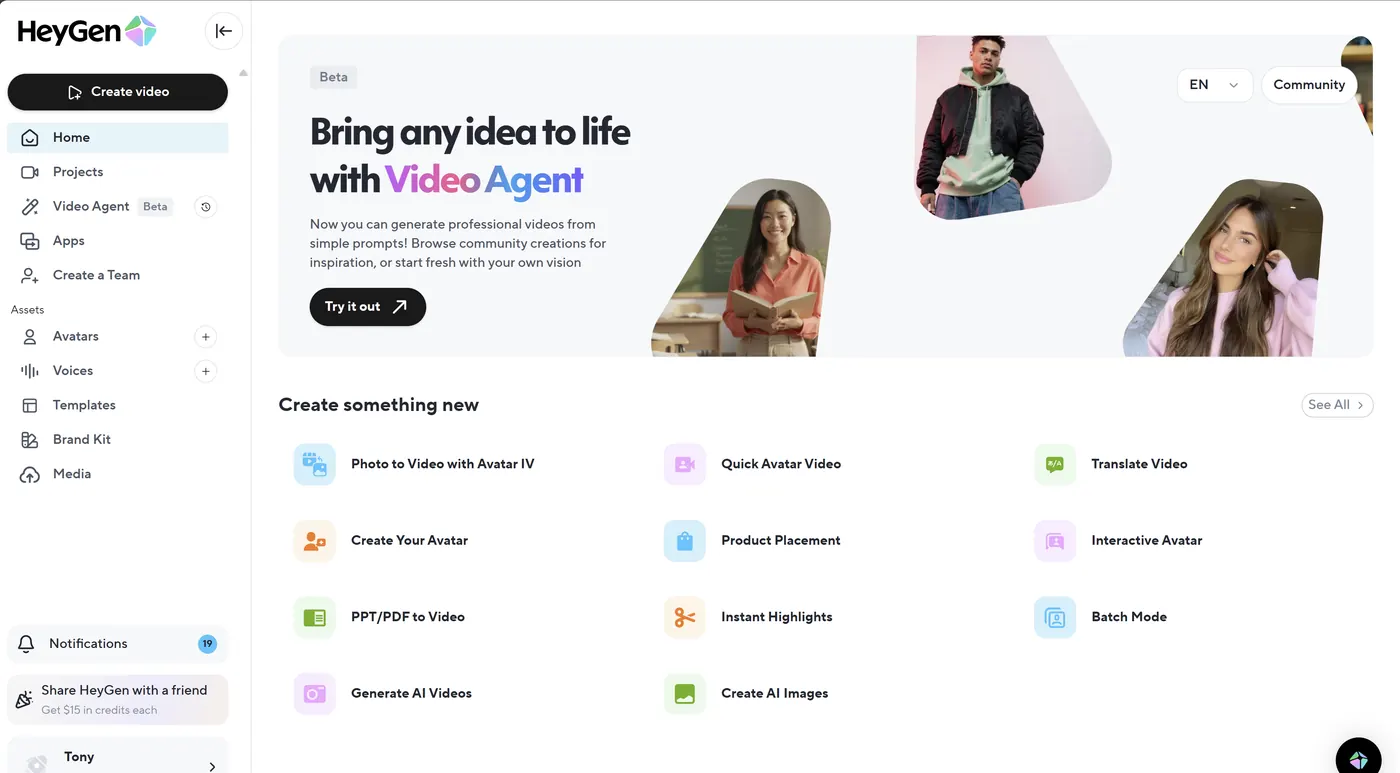
HeyGen — The Enterprise Standard, With a Credit System That Divides Opinion
G2: 4.6/5 · Founded 2020 · $60M+ raised · SOC 2 Type II certified
HeyGen is the most recognized name in AI lip sync for enterprise. Its Avatar IV engine delivers phoneme-level lip sync precision across 175+ languages, and features like Digital Twin (create your avatar from a 2-minute webcam recording) and Video Agent (prompt-to-complete-video) are genuinely ahead of competitors.
What users consistently praise: studio-quality avatar output, the breadth of the avatar library (300+), and multilingual video translation where lip movements actually re-sync to each language rather than just dubbing audio. Enterprise buyers value the SOC 2 Type II compliance, SCORM export for LMS integration, and team collaboration features.
What users consistently complain about: the credit system. Avatar IV costs ~20 credits per minute of video. The Creator plan ($24/month, 200 credits) provides roughly 10 minutes of premium avatar video per month — and many users report burning through their entire monthly credit allocation within the first week. The marketing term unlimited videos is technically true but practically misleading: it only applies to the older, less realistic Avatar III model, not Avatar IV. In May 2026, HeyGen moved Avatar III to the credit system as well, angering long-time subscribers who had renewed under different terms. Unused credits do not roll over between months. Extra credits cost $15 for 300 (~15 minutes of Avatar IV).
Community sentiment: HeyGen own community forum contains multiple threads from users who describe feeling misled by the credit system. One March 2026 post titled Unfortunately a scam states: I subscribed TODAY to an unlimited plan (FOR A YEAR), and I am OUT of credits TODAY. While this is an extreme case, the pattern of credit-related frustration is the most common complaint across G2, Trustpilot, and the community forum.
Company trajectory: HeyGen continues to ship features aggressively — Avatar IV, Video Agent, and Digital Twin all launched in 2025-2026. The product is clearly improving. But the credit system changes suggest a company prioritizing revenue growth over user goodwill, and the communication around those changes has been poor.
Best for: businesses and professional teams who need the highest-quality avatar video, multilingual content with true lip re-sync, and enterprise compliance — and who are willing to budget $79-149/month (not $24) for real-world usage levels.
Not for: individual creators on a budget, anyone who finds opaque credit systems frustrating, or users who need predictable monthly costs.
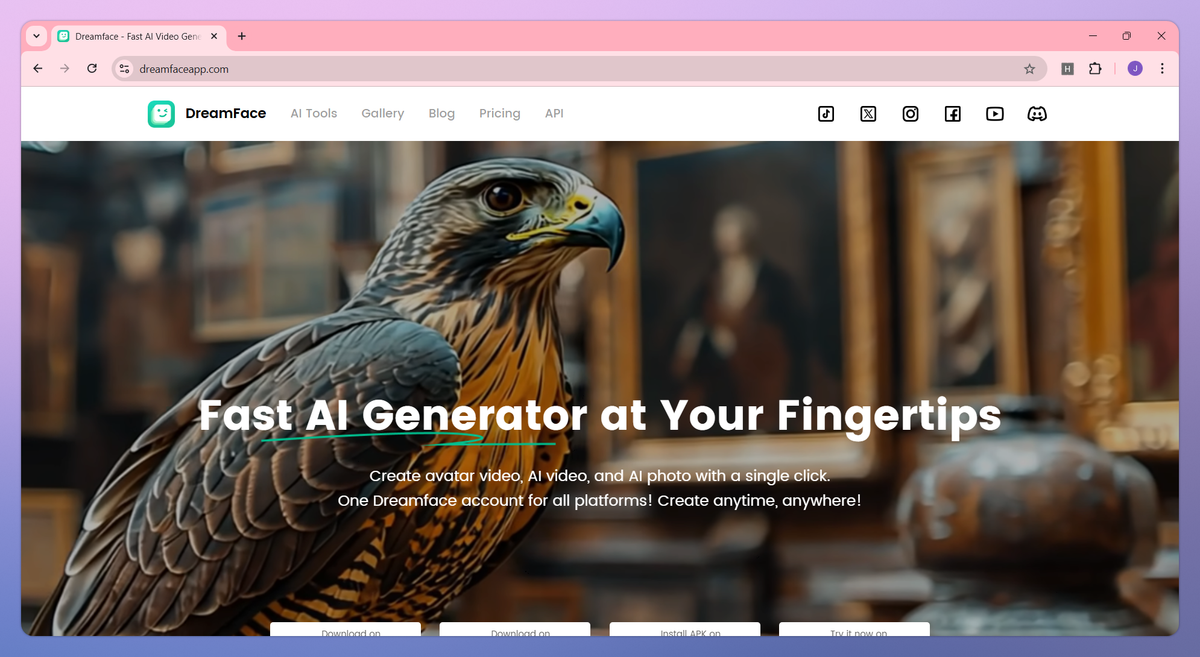
DreamFace — The Creator Darling With a Lifetime Deal That Is Hard to Beat
App Store: 5.0 · Google Play: 4.9 (362K reviews) · 20M+ users · New Port LLC
DreamFace has taken a fundamentally different path from HeyGen: mobile-first, creator-focused, and priced to be accessible. With over 20 million users, 200,000 paid subscribers, and an estimated $10M in annual recurring revenue, it has found product-market fit among social media creators who want fast, fun lip sync content without enterprise complexity.
What users consistently praise: the sheer speed — from opening the app to sharing a lip-synced video takes under 60 seconds. The lip sync quality on well-lit, front-facing photos is genuinely good for the price point. Unique features like Talking Pets (animate your pet photo to sing or speak), Face Dance (motion transfer from dance videos), and music integration for lip-syncing to trending songs have no direct equivalent in competing tools. The Lifetime Pro plan at $34.99 one-time is arguably the best value proposition in AI video — permanent access with no recurring fees.
What users consistently complain about: subscription cancellation is the most common complaint across app store reviews and independent review sites. Users report difficulty canceling through the app, with the recommended workaround being to cancel directly through the App Store or Google Play subscription management. Lip sync quality, while good, is noticeably behind HeyGen on complex audio, fast speech, or non-frontal face angles. Edge distortion artifacts appear around face boundaries, especially with busy backgrounds. Text-to-video and AI image generation features are supplementary additions — not competitive with dedicated tools.
Known limitations: max output resolution is 1080p (free tier is standard definition with watermark). No API access. No team collaboration features. No desktop-class editor. Video length caps at ~3 minutes on Pro and ~10 minutes on Premium. Long videos tend to show stiff, repetitive expressions.
Company trajectory: DreamFace has expanded aggressively from its core lip sync feature into voice cloning (zero-shot, 3 seconds of audio, 19 languages), AI filters, photo restoration, and text-to-video. The feature breadth is impressive, but the depth on secondary features is shallow. The company appears to be pursuing a super-app strategy for AI creation rather than deepening its core lip sync advantage.
Best for: social media creators making TikToks, Reels, and Shorts; casual users who want fun AI effects; anyone who wants permanent access for a one-time payment; pet content creators (Talking Pets is genuinely unique).
Not for: professional video production, enterprise use, anyone who needs reliable multilingual lip re-sync, users who need API access or team collaboration.

Veed.io — The Editor That Does Lip Sync, Not a Lip Sync Tool That Edits
G2: 4.6/5 (2,024 reviews) · Trustpilot: 4.1/5 · 4M+ users · Founded 2018
Veed.io is fundamentally a browser-based video editor that includes AI lip sync as one of its many features. This distinction matters: you are not buying a lip sync tool from Veed — you are buying a video editor that happens to do lip sync, alongside subtitles, transitions, effects, screen recording, and collaboration.
What users consistently praise: the ease of getting started — no installs, everything in the browser, intuitive drag-and-drop interface. The AI subtitle generator is widely regarded as a time-saver, even with its imperfections. Templates for TikTok, Reels, and Shorts with auto-resize make multi-platform publishing efficient. The collaborative workspace features (shared projects, comments) are useful for teams.
What users consistently complain about: performance degradation on longer or more complex projects — videos over 15-20 minutes or with multiple layers cause lag, freezing, and occasional crashes. The watermark situation is a recurring source of confusion: some users report watermarks appearing on exports even after upgrading to a paid plan, and it is not always clear which tiers fully remove branding. Customer support is email-only with 24-48 hour response times — no live chat, no phone, no weekend support. Features have been removed without notice according to multiple Trustpilot reviewers. The free tier is considered too restrictive for any serious use (720p, watermarked, 10-minute limit).
User sentiment extremes: Veed has more polarized reviews than HeyGen or DreamFace. Satisfied users describe it as simple, easy-to-use and cost-effective. Dissatisfied users use stronger language — one Trustpilot reviewer called it the most buggy video editor you will ever experience, while another described the membership program as deliberately misleading. The Capterra rating of 3.2/5 is notably lower than G2 (4.6/5), suggesting satisfaction varies significantly by use case and expectations.
Company trajectory: Veed has been expanding its AI feature set — adding AI avatars, voice cloning, and lip sync to its core editing platform. However, these AI features are widely described as experimental or less polished than dedicated tools. The company appears to be adding AI features for competitive parity rather than leading with them.
Best for: video editors and content teams who want lip sync inside their existing editing workflow without switching tools; social media managers producing short-form content with subtitles and effects; teams that value browser-based collaboration.
Not for: users whose primary need is lip sync quality (dedicated tools do it better); anyone producing long-form content (performance degrades); users who need responsive customer support; anyone frustrated by unclear pricing and watermark policies.
Brand Evaluation Methodology
How we assess each brand — beyond the marketing claims and feature checklists
How We Evaluate These Brands
Product reality, pricing honesty, user sentiment, company trajectory.
This is not a feature comparison. We evaluate each brand on four dimensions that matter for real-world usage:
1. Product Reality — Does the tool actually deliver what the marketing promises? We cross-reference official claims against independent user reviews on G2, Trustpilot, Capterra, and app stores.
2. Pricing Honesty — Is the advertised price what most users actually pay? We look for hidden costs, credit system traps, upgrade pressure, and real total cost of ownership for typical usage levels.
3. User Sentiment — What do verified users consistently praise and consistently complain about? We prioritize patterns (issues mentioned by 10+ reviewers) over one-off opinions.
4. Company Trajectory — Is the product improving or stagnating? We look at update frequency, community responsiveness, and whether recent changes have benefited or frustrated existing users.
Each brand below is evaluated independently against these four dimensions, with specific evidence and sources cited.
A Note on AI-Generated Characters and Lip Sync Brands
Your character is your asset. The brand is just the engine.
All three brands can animate a face with lip sync — but they all depend on you providing the face. Whether you use a real photograph or an AI-generated character image, the quality of your source image directly impacts the lip sync output. Before committing to any brand, consider: where will your character images come from? If you are building a brand identity around a consistent virtual spokesperson, generate that character with an AI image tool first — then test it across the lip sync platforms you are evaluating. The right brand for you is the one that consistently produces good lip sync results with your specific character style.
Which AI Lip Sync Brand Is Right for You?
HeyGen for enterprise. DreamFace for creators. Veed.io for editors. Start by generating your brand character, then pick the engine that fits how you work.